
If you are missing teeth, dental implants in Upland may be the best solution for a natural-looking restoration. Reach out to Alta Dental Care to set up an appointment and see if dental implants can pave the way to a restored smile.
Table of Contents
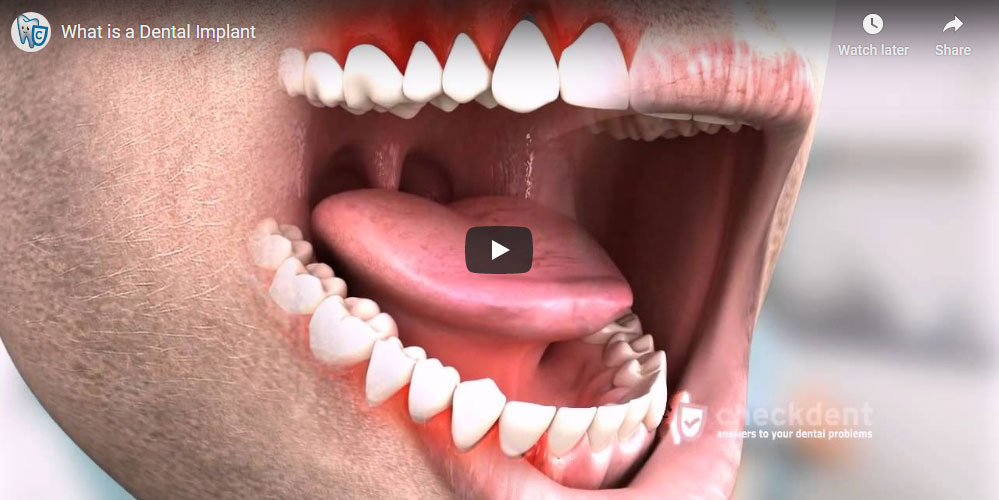
ToggleWhat is Dental Implants?
 Dr. Zaveri did an outstanding job on my implant. It was an amazing experience. I highly recommend him. Kudos to his staff for
their excellent customer service.

Benefits of Dental Implants
- Lasts for decades to a lifetime
- Natural look and feel to replacement teeth
- Highly durable
- No dietary restrictions
- Easy to clean and maintain
- Prevent facial sagging and maintain facial structure
- Improved chewing and speaking
- High success rate
- Reliable boost to your confidence
Breaking Down the Dental Implants Process
Getting dental implants involves several visits spread out over a period of 3 to 9 months. The total timeline will depend on whether you need any additional procedures, such as bone grafting. Though the process requires several steps, patients agree that the long-term benefits make dental implants a worthwhile investment.
The process involves:
- Consultation & Exam
- Preparation: Some patients may first need procedures like a tooth extraction or bone grafting to prepare for dental implants.
- Implant Placement: The dental implant is surgically placed into the gum. As it heals, the gum closes and the post will fuse to the jawbone.
- Impressions: Taking impressions of your teeth ensures that your replacement tooth will fit in seamlessly with your natural teeth.
- Crown Placement: Once your crown is ready, you can come in to test it out. If it looks and feels perfect, then we affix it to the implant, and your smile is restored.
Same Day Dental Implants
- Stability. When installing them, it gains stability through a phenomenon called “osseointegration.” This process creates a pure fusion of the titanium implant with the bone.
- Aesthetics. They take the place of the roots, and then they are installed with crowns. The result is a prosthetic that appears much like the natural tooth. What you can enjoy is aesthetics that removable dentures will not be able to offer.
- Function. Implants help restore correct oral functions.
- Comfort. With stability and function, they prove to offer great comfort to patients.
- Conservativeness. When you choose to receive same-day teeth implants, you get to save the health of the bone and teeth.
- Same-day results!

How is Same-Day Dental Implant Possible?
To prepare for the procedure, Dr. Zaveri first takes a photograph of the area to receive them. Then the dentist stores it on the computer as a 3D image. Our software approximates your new restoration by making biogenic comparisons to surrounding teeth. Dr. Zaveri then finalizes the model using 3D and CAD software. After the design phase, CEREC sends the data to a milling machine that fabricates your new teeth. When they are ready, Dr. Zaveri bonds it to your implants using resin cement.
Factors Affecting the Cost of Implants
One downside is that insurance companies don’t always cover the cost of dental implants. If you’re concerned about the cost of dental implants, speak to Dr. Zaveri about your various options. It’s also essential to understand how the factors listed below influence the final cost.
- Materials Used.
- Number of Implants.
- Costs Associated with Surgery.
- Restorations and Abutments.
Alternative to dentures
Dental implants make an attractive alternative to removable dentures. Since they are permanent, you care for them just like regular teeth. You can also speak, smile, and chew your food with confidence, knowing that your replacement teeth are firmly in place. One downside is that insurance companies don’t always cover the cost of dental implants as many consider them a cosmetic procedure. If you’re concerned about the cost, speak to Alta Dental about your various options. It’s also essential to understand how the factors listed below influence the final cost.
Things to Consider Before Getting Implants
- Materials Used: Dr. Zaveri typically uses titanium for dental implants. Although ceramic may be an option in case of allergies or strong preference. However, titanium costs less
to manufacture and install. - Number of Implants: A patient who only requires replacement of a single tooth will pay less than one who needs to replace all of his or her teeth.
- Restorations and Abutments. Abutments help to connect your dental bridges, dentures, or crowns to your new implants. If you require one of these restorations, that adds
to the overall cost.
We Work with Patients to Help Them Reduce the Cost
Book Your Appointment Today
If you have some questions regarding dental implant complications, you can ask us about it.
Frequently Asked Questions
Dental implants are the gold standard for tooth replacement. Their stability and durability make them ideal for most patients. However, each patient has unique needs. Some signs that dental implants are right for you include:
- Missing only one or a couple of teeth. For replacing more teeth, options like partial dentures or dental bridges may prove better suited.
- Having sufficient jawbone mass. Older patients or individuals who went longer periods without a tooth may have lost some bone mass. You may still get implants, but you may first need bone grafting to restore lost bone material.
- Being ready for a multistep process. Dental implants take a few months from start to finish. While patients agree the wait is worthwhile, some patients may need a more rapid solution.
The dental implant post itself can last for a lifetime. Each post is made from high-grade titanium, which is highly resistant to wear and tear. The crown (tooth part) should also last 15 to 20+ years. Patients with good oral hygiene and health-conscious habits will usually get the most out of their new tooth. If the crown eventually wears down, you can have it replaced with a new one.
Brush and floss daily, just like with your natural teeth. Regular dental checkups remain an essential part in keeping the implant and surrounding gums healthy. While dental implants do not require any dietary restrictions, be mindful of any hard, crunchy, or sticky food items.
Yes, dental implants look and feel natural. We take detailed impressions of your natural teeth, which are used to create a custom-made crown. At first, having a new tooth might feel a little strange, but you should quickly become accustomed to it. The tooth will not have sensitivity to temperature, but this also becomes less noticeable over time. Eventually, patients tend to even forget that their tooth is artificial.
Some insurance plans cover the cost of dental implants, but the amount can vary. Most insurance plans only provide reimbursement for a procedure if it is deemed medically necessary.
The cost of getting a dental implant will vary between patients. We provide each patient with an individualized quote based on the details of their procedure. This factors in elements like bone grafting, extraction, and number of implants. Once all totaled, the cost of a single dental implant tends to be a couple thousand dollars.
However, financing plans can make it easier to budget out for this procedure. We can recommend some flexible options to patients during the consultation.
In general, dental implants are considered the most sophisticated method of dental restoration today and are superior to dentures and bridges. One of the main advantages of dental implants is that they fuse with the jawbone and stimulate it similarly to the roots of your natural teeth, preventing jawbone density loss and changes in the bite and facial structure. Since both dentures and bridges sit above the gumline, they cannot offer similar benefits. Another advantage of dental implants is that they provide superior stability and chewing and biting force compared to dentures and bridges.
It can take 4 to 8 months to get functional dental implants, depending on your oral and general health and how fast your body recovers after the procedure. The implant surgery itself can take 60 to 120 minutes, and the initial recovery takes around 14 days. However, after that, you will need to allow 4 to 8 months for the implant to fuse with the jawbone and become stable before the crown can be placed and the implant becomes functional. Younger patients with good general health and regeneration capacity can go through the entire process within 4 months, while people whose regeneration is slower may need to wait for 6 to 8 months.
If you require additional procedures, such as bone grafting (jawbone restoration) or tooth extraction, before dental implant surgery, the whole process can take 3 to 3 months longer.
Dental implant surgery is not painful for the majority of patients, as your dentist will use a local anesthetic to numb the procedure site. In some cases, sedation can be used instead of or in addition to a local anesthetic, particularly for lengthy and complicated surgeries.
After the surgery, you are likely to experience soreness and swelling at the procedure site for 10 to 14 days. These symptoms are typically well managed with over-the-counter painkillers and gradually subside as the recovery progresses.
The implant surgery recovery process can be roughly divided into two stages. The initial stage takes around 14 days or up to a month in some cases. During this time, you are likely to experience soreness and swelling at the procedure site that will go away gradually as healing progresses. Once the initial recovery is complete, you will feel as you normally do, but the implant will still need more time to heal all the way. The second stage of recovery takes 4 to 8 months, depending on how well your body regenerates. During this stage, your new implant will gradually fuse with the jawbone (this process is called osseointegration). Once this process is complete and the implant is stable, a crown can be placed, and you can use your implant as your natural teeth.
What we think of as a dental implant consists of three main parts:
- the implant itself (a screw-like post inserted into the jawbone)
- an abatement (connects the crown to the implant)
- a dental crown (the part that looks like a natural tooth)
The post (implant) and the abutment are typically made of titanium, a durable and biocompatible material. The crown can be made of porcelain, zirconia, or porcelain-fused-to-metal. All these materials are durable, stain-resistant, and look very similar to the enamel of our natural teeth.