
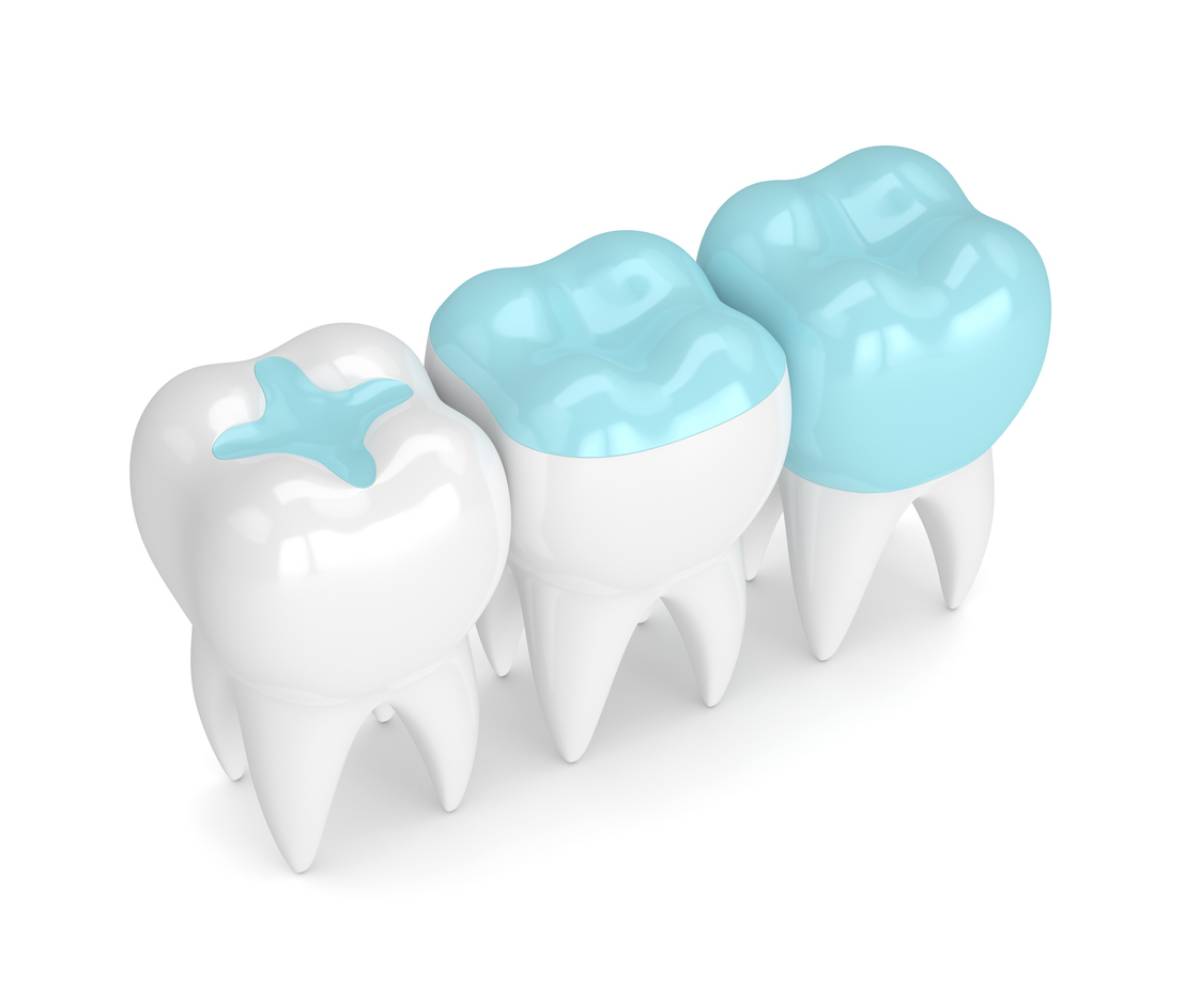
We have probably all heard about dental fillings, but not everyone knows about the alternative restoration method called inlays and onlays. In this article, we discuss what inlays and onlays are and when they may be preferred over other methods for treating decay and damage.
What Are Dental Inlays and Onlays?
Both dental inlays and onlays are used to treat tooth decay when a dental filling cannot effectively cover the affected area. Still, not enough of the tooth’s structure is destroyed to merit a dental crown. Inlays and onlays are always custom-made for each patient. Inlays are used when the top of the tooth’s crown has to be restored and fit inside the grooves in the chewing surface. Onlays can resemble a partial crown and can cover a larger area of the biting surface of the tooth.
Additionally, onlays and inlays are often used to replace old dental fillings when enough of the tooth’s structure is preserved, and its roots are healthy, to restore moderate cracks in teeth and reinforce worn-out teeth.
Materials used for inlays and onlays include resin composite, porcelain, zirconia, gold, and silver amalgam. Metal, porcelain, and zirconia inlays and onlays are more durable than resin composite inlays and onlays and tend to last longer. Also, porcelain, zirconia, and composite are tooth-colored materials that make the restoration look natural. Gold inlays and onlays can be noticeable in the mouth when you speak and smile, and are more often chosen for the teeth at the back of the mouth.
The Main Benefits of Dental Onlays and Inlays
In cases when it is possible to use onlays or inlays instead of other types of restorations, they can offer the following benefits:
- Inlays and onlays require less of the healthy tooth structure to be removed than dental crowns.
- Composite fillings tend to last for up to 7 years, while onlays and inlays, especially those made of porcelain, zirconia, or metal, can last for up to 15 years.
- Inlays and onlays better reinforce the tooth compared to dental fillings.
What Happens During the Procedure of Inlays or Onlays Placement
In the majority of cases, the placement of inlays or onlays requires at least two visits to a dental office. During the first visit, your dentist removes the decayed or damaged part of the tooth and takes scans or impressions of the tooth. Then, these scans or impressions are sent to a lab, where a technician will fabricate a custom restoration that fits your tooth perfectly. At the end of the first visit, your dentist will place a temporary restoration to protect your tooth from bacteria while you wait for a permanent inlay or onlay.
On your second visit, the custom-made restoration will be placed on your tooth, and your doctor will ensure it fits comfortably and seamlessly in your mouth and make adjustments if necessary.
Some dental offices offer same-day onlays and inlays services. In these cases, the restorations are made in the dental office using intraoral scanners and in-office milling systems.
How Much Do Inlays and Onlays Cost
The final price of your restoration will depend on the material used, the size of the restoration, the complexity of the procedure, and your dentist’s expertise. Generally, you can expect to pay $700 to $2000 dollars for the treatment of one tooth without insurance.
Restore Your Oral Health with My Dentist Upland
If you require a tooth restoration due to decay or trauma, do not hesitate to make an appointment with a reliable dentist at My Dentist Upland today. Our specialists will conduct a comprehensive examination of your case and offer an effective restoration solution. We are looking forward to your visit.